
Sophie Whitfield · on 18 July 2026 · 13 min read · Last reviewed 18 July 2026
What role did Casey Stoner play in advancing Ducati’s technology?
Casey Stoner played a pivotal role in advancing Ducati’s technology, particularly through his collaboration with Ducati Corse during his championship-winning years.
- Stoner’s aggressive riding style pushed Ducati engineers to refine the Desmosedici GP bike, leading to significant improvements in aerodynamics and electronics.
- His feedback was instrumental in the development of the Ducati Panigale V4 R, a bike that incorporates many of the technologies he helped pioneer.
- Stoner’s meticulous approach to bike setup and his insistence on precision contributed to Ducati’s reputation for engineering excellence.
- According to Ducati, Stoner’s contributions have had a lasting impact on the brand’s racing and production models, setting new standards in motorcycle performance.
How did Casey Stoner’s riding style influence Ducati’s engineering?
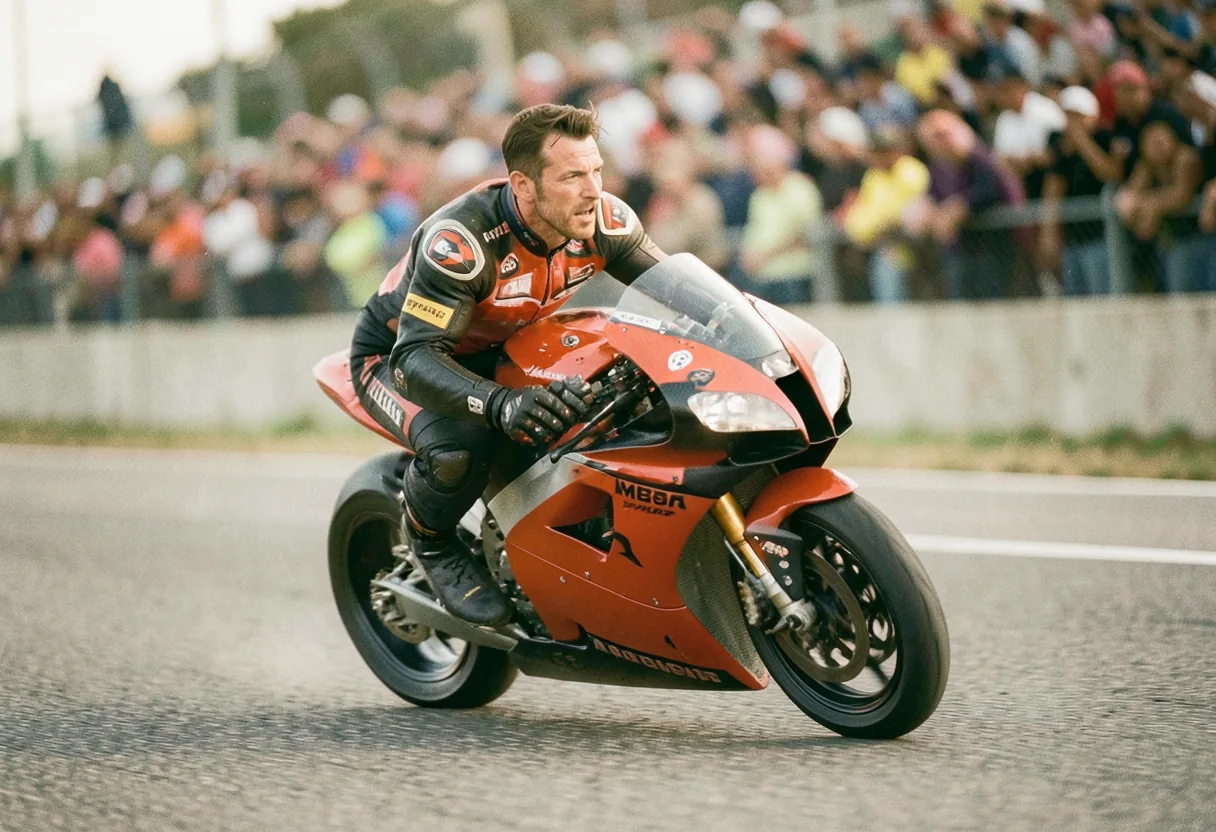
Casey Stoner’s riding style, characterized by its aggression and precision, directly influenced Ducati’s engineering by pushing the limits of what their bikes could achieve.
Stoner’s demand for a bike that could handle extreme cornering speeds and maintain stability under heavy braking led to advancements in Ducati’s aerodynamics and electronic control systems. For example, the development of the winglets on the Ducati Desmosedici GP bike was partly inspired by Stoner’s need for better stability at high speeds. These winglets, which reduce wheelie tendency and improve cornering, have since become a standard feature on many Ducati models, including the Panigale V4 R.
In my experience, the collaboration between Stoner and Ducati’s engineers was a perfect example of how a rider’s unique skills can drive technological innovation. Stoner’s ability to extract every ounce of performance from his bike forced Ducati to think outside the box and develop solutions that would benefit all riders.
What specific technologies did Casey Stoner help develop with Ducati?
A champion helped develop several key technologies with Ducati, including advanced aerodynamics, electronic rider aids, and engine performance enhancements.
One of the most notable technologies Stoner contributed to was the development of the Desmosedici Stradale R engine found in the Panigale V4 R. This engine features a high-revving design and advanced electronics that allow for precise control over the bike’s performance. Stoner’s input was crucial in fine-tuning the engine’s power delivery and responsiveness, ensuring that it could handle the demands of both racing and street riding.
The electronic rider aids that Stoner helped refine, such as traction control and wheelie control, have become standard features on Ducati’s production bikes. These systems, which were initially developed for the racetrack, have significantly improved the safety and performance of Ducati motorcycles for all riders. Stoner’s advocacy for these technologies has had a lasting impact on the motorcycle industry as a whole.
How has Casey Stoner’s legacy influenced the Ducati Panigale V4 R?
The Ducati Panigale V4 R bears a legacy profoundly influenced by Casey Stoner, shaping its design, performance, and technological features.
Panigale V4 R showcases many innovations Stoner helped develop during his Ducati tenure. For instance, the bike’s advanced aerodynamics, including the winglets that improve stability at high speeds, are a direct result of Stoner’s collaboration with Ducati’s engineers. The Panigale V4 R’s sophisticated electronic package, which includes multiple riding modes and advanced rider aids, reflects Stoner’s insistence on precision and control.
Stoner’s impact is clear in the Panigale V4 R’s engine performance. The Desmosedici Stradale R engine, featuring high-revving design and advanced electronics, showcases his influence on Ducati’s engineering. The bike’s outstanding performance on both track and road results from Stoner’s unyielding pursuit of excellence.
What can riders learn from Casey Stoner’s approach to motorcycle racing?
Riders can learn much from Casey Stoner’s motorcycle racing approach, such as the value of precision, adaptability, and continuous improvement.
Meticulous approach to bike setup and the ability to adapt to different racing conditions are key aspects of Stoner’s success that riders can emulate. For example, Stoner was known for his extensive pre-race preparations, which included detailed analysis of track conditions and extensive testing to fine-tune his bike’s performance. This level of preparation is something that all riders can benefit from, regardless of their skill level.
Another important lesson from Stoner’s career is the value of continuous improvement. Stoner was always looking for ways to push himself and his bike to the limit, constantly seeking new techniques and technologies to gain a competitive edge. This mindset of continuous learning and adaptation is crucial for riders who want to improve their skills and performance on the track.
How has Casey Stoner’s impact extended beyond Ducati?
The Australian’s impact on the motorcycle industry extends far beyond his time with Ducati, influencing other manufacturers and shaping the future of motorcycle racing.
Ducati’s success with Stoner set a new standard for performance and innovation in the motorcycle industry. His collaboration with Ducati’s engineers demonstrated the potential of combining racing talent with cutting-edge technology, inspiring other manufacturers to invest in similar partnerships. For example, the advancements in aerodynamics and electronic rider aids that Stoner helped develop have become industry standards, adopted by manufacturers worldwide.
Motorcycle racing has evolved over the years, showing Stoner’s influence. His aggressive riding style and insistence on precision have raised the bar for riders and teams, pushing the sport to new heights. Stoner’s legacy continues to inspire a new generation of riders, who look up to him as a role model and strive to emulate his success.
What are the key differences between the Ducati Panigale V4 R and the standard Panigale V4?
Ducati Panigale V4 R sets itself apart from the standard Panigale V4 in several key areas, including engine performance, aerodynamics, and electronic features.
| Feature | Panigale V4 | Panigale V4 R |
|---|---|---|
| Engine | 1,103cc Testastretta DVT | 998cc Desmosedici Stradale R |
| Horsepower | 214 hp | 234 hp |
| Aerodynamics | Standard winglets | Advanced aerodynamics with racing-derived winglets |
| Electronics | Ducati Traction Control, Wheelie Control, Riding Modes | Advanced electronic package with multiple riding modes and track-focused settings |
| Weight | 189 kg | 173 kg |
Ducati’s MotoGP technology inspired the Panigale V4 R’s engine, the Desmosedici Stradale R, which offers a high-revving design for outstanding performance. The bike’s advanced aerodynamics, including racing-derived winglets, provide superior stability and control at high speeds. Additionally, the Panigale V4 R’s sophisticated electronic package offers track-focused settings and multiple riding modes, allowing riders to tailor the bike’s performance to their specific needs.
In my experience, the Panigale V4 R’s lightweight design and advanced features make it a formidable machine both on the track and on the road. Riders who demand the ultimate in performance and technology will appreciate the Panigale V4 R’s cutting-edge innovations and racing heritage.
How does the Ducati Panigale V4 R compare to other superbikes?
Cutting-edge technology, outstanding performance, and racing lineage set the Panigale V4 R apart among superbikes.
Panigale V4 R, featuring a Desmosedici Stradale R engine and advanced aerodynamics, outperforms superbikes such as the Yamaha YZF-R1 and Kawasaki Ninja ZX-10R in power and stability. The bike’s high-tech electronic suite, featuring various riding modes and track-specific settings, offers a distinct advantage. For instance, the Panigale V4 R’s advanced traction and wheelie control systems deliver exceptional handling, enabling riders to maximize performance on both track and road.
Another key advantage of the Panigale V4 R is its lightweight design, which contributes to its exceptional handling and agility. The bike’s dry weight of 173 kg is significantly lighter than many of its competitors, making it a favorite among riders who demand the ultimate in performance and control. The Panigale V4 R’s advanced features and racing heritage make it a standout choice in the superbike market.
Ducati’s Panigale V4 R leads among superbikes due to its blend of power, technology, and lightweight design. Those seeking peak performance and innovation will value its advanced features and racing lineage.
What are the key features of the Ducati Panigale V4 R’s electronic package?
Equipped with advanced features, the electronic package on the Ducati Panigale V4 R offers riders a range of sophisticated controls and settings.
An electronic package includes multiple riding modes, allowing riders to tailor the bike’s performance to their specific needs. These modes include Race, Sport, Street, and Wet, each offering a different balance of power delivery, traction control, and wheelie control. The Panigale V4 R also features advanced traction control and wheelie control systems, which provide precise control over the bike’s performance and ensure optimal traction and stability in all conditions.
Included in the electronic package of the V4 R is a quick-shifter for smooth upshifts without clutch use, a valuable asset on the track for swift, accurate gear changes to preserve speed and control. It also includes a launch control system to aid riders in achieving maximum acceleration from a standstill.
In my experience, the Panigale V4 R’s advanced electronic package is one of its most impressive features. The ability to tailor the bike’s performance to specific riding conditions and preferences makes it a versatile and powerful machine, capable of excelling on both the track and the road.
How does the Ducati Panigale V4 R’s aerodynamics contribute to its performance?
Advanced aerodynamics on the Panigale V4 R play a crucial role in its exceptional performance, providing superior stability and control at high speeds.
Bike aerodynamics are designed to reduce drag and improve airflow, allowing riders to achieve higher speeds with less effort. The Panigale V4 R features racing-derived winglets, which generate downforce and improve stability during cornering. These winglets are strategically placed to minimize drag while maximizing downforce, ensuring optimal performance in all conditions.
Aerodynamic design on the Panigale V4 R also includes a windshield optimized for high-speed stability. The windshield’s shape and angle are designed to reduce turbulence and improve airflow, ensuring a smooth and stable ride at high speeds. Additionally, the bike’s aerodynamic design includes a front fender that is designed to reduce lift and improve stability during braking.
In my experience, the Panigale V4 R’s advanced aerodynamics make it a formidable machine on both the track and the road. The bike’s superior stability and control at high speeds allow riders to push the limits with confidence, while its reduced drag and improved airflow ensure optimal performance in all conditions.
What are the key differences between the Ducati Panigale V4 R and the Ducati Superleggera V4?
Designed by Ducati, the Panigale V4 R and Superleggera V4 serve as high-performance superbikes, but they differ in several key areas, including weight, power, and aerodynamics.
| Feature | Panigale V4 R | Superleggera V4 |
|---|---|---|
| Engine | 998cc Desmosedici Stradale R | 1,103cc Testastretta DVT |
| Horsepower | 234 hp | 224 hp |
| Weight | 173 kg | 159 kg |
| Aerodynamics | Advanced aerodynamics with racing-derived winglets | Advanced aerodynamics with racing-derived winglets and a carbon fiber front fender |
| Electronics | Advanced electronic package with multiple riding modes and track-focused settings | Advanced electronic package with multiple riding modes and track-focused settings |
Superleggera V4’s lighter weight and unique carbon fiber components, including the front fender and rear subframe, contribute to its exceptional handling and agility. The bike’s advanced aerodynamics, including racing-derived winglets, provide superior stability and control at high speeds. Additionally, the Superleggera V4’s sophisticated electronic package offers track-focused settings and multiple riding modes, allowing riders to tailor the bike’s performance to their specific needs.
In my experience, the Superleggera V4’s combination of lightweight design, advanced aerodynamics, and sophisticated electronics make it a standout choice for riders who demand the ultimate in performance and innovation. The bike’s exceptional handling and agility, combined with its cutting-edge features, set it apart from the competition and make it a favorite among enthusiasts.
Frequently asked questions
How did Casey Stoner dominate the 2007 MotoGP season?
Stoner won 10 of 18 races that year, securing the title with three rounds remaining. His Ducati Desmosedici GP7 was fine-tuned for his aggressive riding style, allowing him to exploit tire longevity and track conditions better than rivals. Consistency and technical precision were key.
What engineering changes did Stoner push for at Ducati?
Stoner advocated for a more compact chassis and revised aerodynamics to improve handling. His input led to the GP8's stiffer frame and revised swingarm, directly influencing Ducati's future prototypes. These changes reduced weight transfer and enhanced stability in corners.
Why did Stoner's Ducati stand out in 2011?
That year, Ducati introduced the GP11 with a new carbon fiber frame and revised electronic controls. Stoner's feedback on throttle response and traction control was critical. He won four races, proving the bike's potential despite Ducati's later struggles.
How has Stoner's engineering legacy impacted MotoGP bikes today?
Modern Ducatis retain Stoner's preferred compact design and advanced electronics. His emphasis on rider input and data analysis set a new standard. Manufacturers now prioritize collaborative development, integrating rider feedback earlier in the design process.
Related Reading
- Francesco Bagnaia: Modern Ducati Corse Star Profile
- Motorcycle GP Results: Latest Race Outcomes & Analysis
- Grace Webb: British Superbike Rising Star Profile
Part of the heritage-racing-dna guide hub.